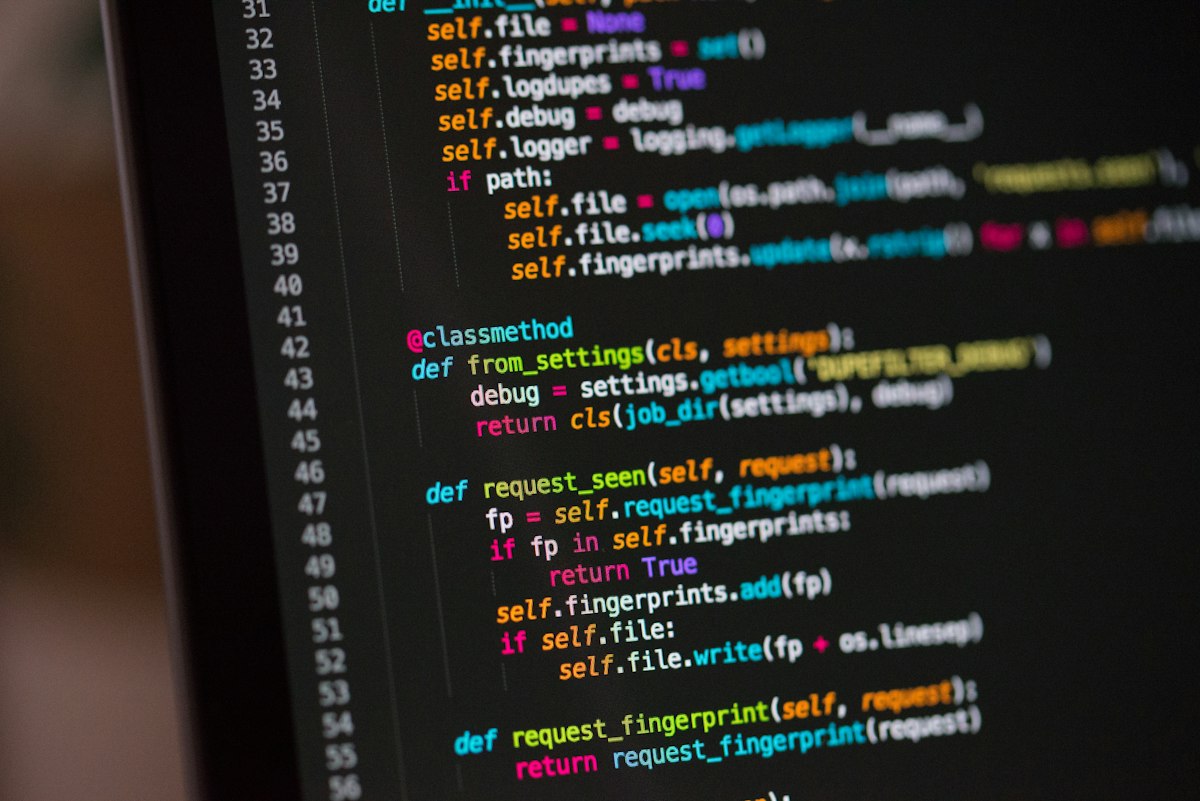
OpenAI has quietly acquired Astral — the company behind uv and Ruff, tools that now run inside hundreds of millions of Python developer workflows every month. This isn't just an acqui-hire; it's Sam Altman planting a flag at the exact point where AI agents touch real code.
What happens when the most powerful AI lab in the world decides it needs to own the plumbing?
On March 19th, OpenAI announced it would acquire Astral — a small but extraordinarily influential developer tools company — and fold its team directly into the Codex division. If you haven't heard of Astral, you've almost certainly used its software. Ruff, the Python linter Astral ships, pulls 179 million downloads every month. uv, its Rust-based package manager, notches 126 million. Together these are not niche utilities; they are load-bearing infrastructure for the Python ecosystem that powers AI research, data science, and backend software worldwide.
Sam Altman is not buying this company for the download numbers. He is buying it because Codex — OpenAI's flagship software engineering agent — needs to do more than write code. It needs to run inside the actual workflows that developers depend on, and that means owning the tools those developers already trust.
The Codex Bet Is Getting Serious
Codex has quietly become one of OpenAI's most important products. Since the start of 2026, it has seen a 3x jump in users and a 5x increase in usage, now serving more than 2 million weekly active developers. The system does not just autocomplete — it takes on entire coding tasks in isolated cloud sandboxes, runs tests, lints code, proposes pull requests, and verifies results. It is powered by codex-1, a version of OpenAI's o3 model fine-tuned specifically for software engineering through reinforcement learning on real-world coding tasks.
But here is the problem Altman faces: Codex operates largely in a bubble. It writes code and hands it back. To become the agent that handles the entire development lifecycle — planning, writing, testing, linting, dependency management, type-checking — it needs to interact with the tools developers have running at every stage of their workflow. Astral's toolkit covers exactly that middle layer.
Charlie Marsh, Astral's founder and CEO, started the company three years ago with $4 million in seed funding and a single thesis: if you could make the Python ecosystem even 1% more productive, the compounding impact across millions of developers would be enormous. He turned that into one of the fastest-growing developer tool companies in recent memory. The acquisition price was not disclosed, but Astral raised at a Series B led by Andreessen Horowitz, putting it firmly in the nine-figure valuation territory before any deal.
Marsh framed the move not as a retreat but as a doubling down. "AI is rapidly changing the way we build software," he wrote in a blog post announcing the deal. "If our goal is to make programming more productive, then building at the frontier of AI and software feels like the highest-leverage thing we can do." OpenAI, in its announcement, echoed the same language — the goal is systems that "participate in the entire development workflow," not just the writing step.
The Claude Code Shadow Hanging Over This Deal
You cannot understand this acquisition without understanding what Anthropic's Dario Amodei has been building in parallel. Claude Code — Anthropic's coding agent — has grown into a genuine competitor to Codex, and in November 2025, Anthropic made its own infrastructure play: it acquired Bun, the JavaScript runtime, citing "faster performance, improved stability, and new capabilities." The pattern is identical. Two frontier AI labs, both betting that the next phase of coding agents isn't about raw LLM capability but about who controls the infrastructure those agents run on.

The strategic logic for inference-heavy systems like Codex and Claude Code is that raw model capability is table stakes. GPT-5.4, Claude Opus 4.6, Gemini 3.1 — the frontier models are converging fast enough that pure benchmark performance is no longer a durable moat. What creates stickiness is integration: the agent that is already touching your Python environment, already running your linter, already managing your dependencies, is the agent that stays.
OpenAI has been building toward this with a string of acquisitions in 2026. Earlier in March, it acquired Promptfoo, makers of an open source security tool for testing LLMs against red-team attacks. Astral follows the same playbook — buy the open source project that developers already use, bring the team in-house, and weave the tooling into Codex at an integration depth that external competitors cannot easily replicate.
What This Means for the Open Source Community
Both Marsh and OpenAI were careful to promise that uv, Ruff, and ty will remain open source after the acquisition closes. Marsh has framed OpenAI as a steward, not a captor. But the Python community has reason to watch carefully. Open source tools acquired by large companies have a mixed track record. The incentives shift — from serving the broadest community to serving the acquiring company's product roadmap. Astral's tools currently work with any editor, any workflow, any company. If deep Codex integration becomes the primary development axis, that generality could erode over time.
For now, the deal is still pending regulatory approval. Until then, Astral and OpenAI remain separate companies. But the direction is unmistakable. Sam Altman is no longer satisfied with models that generate code — he is moving to own the entire compute and toolchain pipeline through which that code gets written, run, and shipped. The weights are just the beginning. The real battle for AI-driven software development is happening at the level of linters, package managers, and type checkers, and OpenAI just made its most direct move yet to control that layer.
Deep Dive
Want more context on how the big labs are racing to own the AI coding stack?
- Google Just Shipped the Voice AI That Every Developer Has Been Waiting For — How Gemini 3.1 Flash Live is staking out agent infrastructure in a parallel race
- Stanford Scientists Just Proved Your AI Therapist Is Lying to You — The sycophancy problem inside LLMs that makes AI coding agents harder to trust than they look
Found this useful? Share it.
Get posts like this in your inbox.
The Signal — AI & software intelligence. 4x daily. Free.
Subscribe free →
